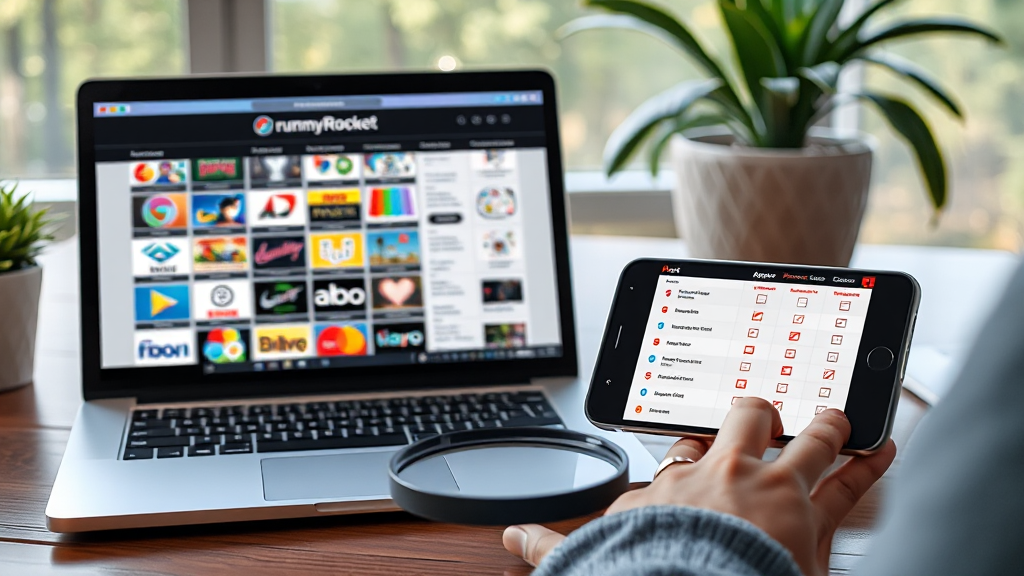
How to Compare All Top Yono Rummy App Options Before You Pick One
You open your phone, search for a rummy app, and immediately hit a wall: dozens of names, near-identical screenshots, and reviews that all sound like they were written by the same person. You are not looking for a lecture on what rummy is. You already know the game. What you want is a straight answer about which of the All Top Yono Rummy App options actually deserve space on your phone, and how to tell them apart without installing five of them first.
As someone who moderates a community where this question comes up weekly, I can tell you the pattern. The people who end up happy are not the ones who chase the newest name. They are the ones who compare a short list against a few concrete criteria and then commit. This piece walks through that comparison the way I would explain it to a new member: what the category really is, what separates one app from another, where the trade-offs hide, and how to make a final call you will not regret a month later.
What the Yono Rummy App Category Actually Contains
The Yono label gets used loosely. It is not one single product with one single developer. It is a family of rummy-style apps that share a naming convention, a similar visual language, and often a similar onboarding flow. That is exactly why comparison is hard: the surface looks identical, so the differences only show up once you dig into specifics.
When a directory lists these apps side by side, the useful entries are the ones that separate a few things clearly. First, the game modes offered: points rummy, pools rummy, deals rummy, and any practice or tournament variants. Second, the table limits and how the app handles low-stakes learning versus higher-stakes play. Third, the practical stuff people forget to check — app size, battery drain, whether it runs on older Android versions, and how often it pushes updates.
A good directory does not just dump names. It groups apps by what a user is actually trying to do. If you are a casual player who wants a quick match on a commute, your shortlist looks different from someone who wants structured tournaments and detailed stats. Treat the category as a menu, not a ranking, and the comparison becomes far less overwhelming.
What Separates One App From Another in Practice
Once you accept that the names are not the differentiator, four things matter most.
Interface clarity. Rummy is a game of reading your hand quickly. If the table layout is cluttered, if the discard pile and the draw options are not obvious at a glance, the app will frustrate you no matter how many features it claims. Open a screenshot and ask whether you could find the draw button in two seconds. If not, move on.
Onboarding and practice options. The best apps let you learn their specific rhythm before you commit to anything. Look for a practice table, a tutorial mode, or at least a low-pressure first match. An app that throws you straight into a fast table is telling you something about who it is built for.
Stability and update history. A rummy app that crashes mid-match is worse than a plain one. Check the last update date and read the recent reviews rather than the overall star rating. Recent reviews tell you what the app is like today; the average rating often reflects a version that no longer exists.
Transparency about rules and limits. Clear apps explain their table rules, entry conditions, and any in-app currency in plain language. Vague apps rely on you not asking questions. If the details are buried or missing, that is a comparison point, not a detail.
This is also where a curated listing helps. When someone has already organised the apps and pulled out the comparable details, you spend your time deciding instead of researching. That is the whole point of a directory: it removes the repetitive part of the work.
The Realistic Trade-Offs You Will Face
No app wins on every axis, and pretending otherwise is how people end up disappointed. Here are the trade-offs I see most often.
Features versus simplicity. Apps packed with modes, leaderboards, and daily events can feel rich at first and exhausting by week three. Simpler apps are easier to return to but may lack the variety that keeps you interested. Decide which failure mode you can live with.
Small install versus polish. Lightweight apps run smoothly on older phones but often look dated. Heavier apps look great but demand more storage and battery. If your device is a few years old, weigh this honestly rather than assuming the flashier app will perform well.
Popularity versus fit. The most downloaded app in the category is not automatically the best one for you. Popular apps optimise for the average user, and you may not be the average user. A smaller app with a cleaner table and a calmer pace can be the better daily companion.
Speed versus clarity. Fast-paced tables are exciting but punishing for anyone still learning the app’s controls. If you are new to a particular app, start slow even if the app offers fast modes. You can always speed up later.
Write these trade-offs down next to your shortlist. Two or three apps, each with one honest advantage and one honest drawback, is a far better starting point than a list of ten names with no notes.
How to Make Your Final Choice and Move On
At some point you have to stop comparing and start playing. Here is the closing routine I recommend to anyone who asks.
Narrow to three apps. Install two at most, and give each one a fair session rather than a two-minute glance. Play a full match, not just the first hand. Pay attention to how the app feels when you are losing, because that is when interface problems become obvious. Check whether the app respects your time — does it load quickly, does it remember your preferences, does it avoid nagging pop-ups?
Then pick one and delete the other. Keeping a backup app installed sounds sensible, but in practice it splits your attention and slows your improvement. If the chosen app disappoints you after a couple of weeks, you can revisit your shortlist with better information than you had before.
Finally, revisit your choice occasionally rather than constantly. The category changes, apps update, and a new option may suit you better in six months. But constant switching is its own trap. Compare deliberately, choose confidently, and let the app earn its place on your home screen through actual use. That is the whole method, and it works whether you are a first-time downloader or someone who has tried half the category already.