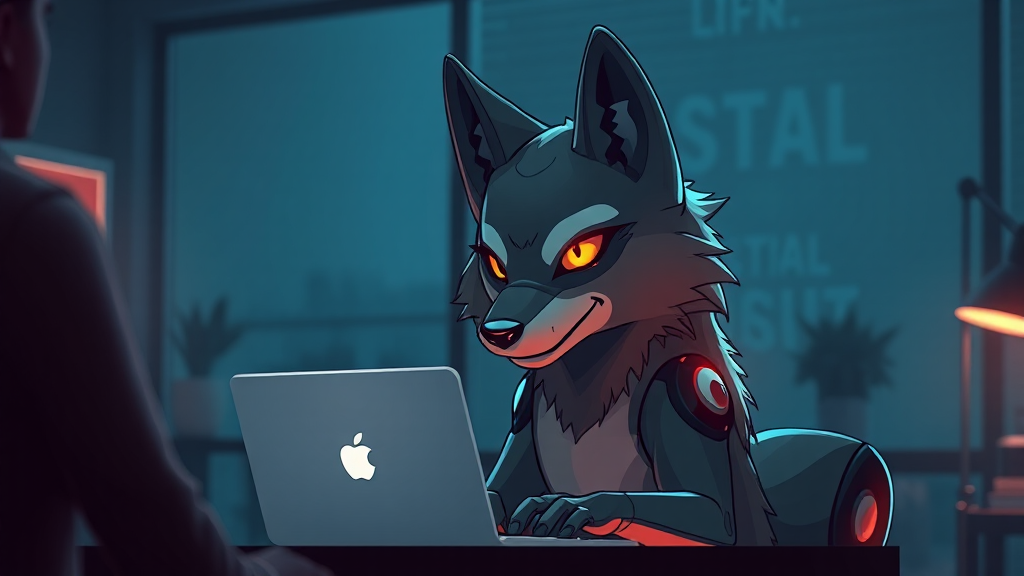
Furry AI Chat NSFW: How Anthropomorphic Roleplay Bots Actually Work
Anthropomorphic characters have been part of online storytelling for decades, but the last few years turned them into something interactive. Instead of reading about a fox mechanic, a dragon archivist, or a wolf smuggler, you can now hold a conversation with them. That shift is what people usually mean when they search for furry ai chat nsfw — a category of conversational AI where animal-inspired personas are written for adults and allowed to explore mature themes without the constant hand-holding of a general-purpose assistant.
This article looks at how these bots are built, why the furry format fits conversational AI so well, what separates a good character from a forgettable one, and what you should think about before spending hours inside a roleplay. No hype, no moralizing — just a practical look at the technology and the culture around it.
What “Furry AI Chat NSFW” Really Describes
The phrase bundles three separate ideas. “Furry” refers to characters with animal traits — ears, tails, fur, scales, feathers — often combined with human-like intelligence and speech. “AI chat” means a language model generating responses in real time, usually inside a chat interface with memory of the conversation. “NSFW” signals that the content is intended for adults and may include romance, flirtation, violence, or other themes that mainstream platforms filter out.
Put together, the category describes adult-oriented roleplay with anthropomorphic characters powered by a language model. It is not one product. It is a genre that spans dedicated apps, character-hosting websites, and community-made persona collections. Some are polished, with avatars, voice, and long-term memory. Others are simple text boxes where the only thing that matters is the writing prompt behind the character.
What makes the genre distinct is intent. A general chatbot is designed to answer questions. A furry roleplay bot is designed to stay in character, react emotionally, and let the user steer the scene. That difference in purpose shapes everything from the model choice to the safety layer to the user interface.
Why Anthropomorphic Personas Fit Conversational AI So Well
There is a reason furry characters dominate a large share of roleplay platforms. Anthropomorphic personas solve several problems that plain human characters struggle with.
They are immediately memorable. A character described as “a raccoon who runs a night market stall and never sleeps” sticks in your head faster than “a friendly shopkeeper.” Visual and species details give the model strong anchors to return to, which keeps responses consistent over long sessions.
They lower the barrier to fantasy. Users can explore personality traits, relationships, or power dynamics through a character that is clearly fictional. That distance makes it easier to experiment without feeling exposed.
They support worldbuilding. Species often come with implied lore — territory, instincts, social structures. A writer can lean on those cues to create a setting quickly, and the model can improvise within it without drifting off-topic.
They reward detail. Fur color, tail behavior, scent, ear position, vocal tone — small physical descriptions give the AI concrete things to reference. That produces richer replies than generic emotional statements.
In practice, the furry frame is less about the animal and more about the permission it gives both writer and reader to play inside a clearly fictional space.
How These Bots Are Built Under the Hood
Most platforms follow a similar pipeline, even if the surface looks different.
1. Character definition. The creator writes a persona file: name, species, age, appearance, personality, speech style, backstory, boundaries, and example dialogue. This is the single most important input. A vague persona produces vague replies.
2. Prompt assembly. Each time you send a message, the platform builds a prompt that combines system instructions, the character sheet, recent conversation history, and your new input. Long-term memory features may also inject summarized facts from earlier sessions.
3. Model inference. A language model generates the next reply. Some platforms use their own fine-tuned models; others route to third-party APIs. The model choice affects tone, creativity, and how well it follows the persona.
4. Safety and content filtering. Adult platforms typically apply lighter filters than mainstream assistants, but most still block illegal content and may restrict certain categories. The exact rules vary widely, which is why reading a platform’s terms matters more than assuming.
5. Memory and state. Good systems track relationship status, location, mood, and past events. Without that, characters reset emotionally every few messages and the roleplay feels hollow.
The quality gap between platforms usually comes down to steps one and five. Anyone can plug a prompt into a model. Keeping a character coherent for fifty messages is engineering.
What Separates a Great Furry Roleplay Character From a Weak One
After enough sessions, patterns emerge. Strong characters share a few traits.
Specific voice. They have a rhythm. Maybe the character speaks in short clipped sentences, or uses old-fashioned phrasing, or slips into a regional dialect. Voice is what makes text feel like a person rather than a paragraph.
Clear wants. A character who wants something — approval, information, protection, a way home — drives the scene forward. Characters with no goals wait for you to entertain them.
Consistent boundaries. Even in adult roleplay, believable characters have lines they will not cross casually. Those limits create tension and make intimacy feel earned rather than automatic.
Reactive memory. If you mentioned a scar three scenes ago, the character should still know. Memory is the difference between a chatbot and a companion.
Room to grow. The best personas change over time. A guard who starts hostile might become loyal. A shy character might become bold. Static personas get boring fast.
Weak characters tend to be generic. They agree with everything, describe themselves in the same way every message, and forget what happened ten lines ago. That is usually a prompt problem, not a model problem.
Writing Prompts That Actually Work
If you create your own character, the prompt is your script. A few habits make a large difference.
Start with a one-line summary that captures the core: species, role, and defining trait. Then expand into appearance, personality, speech patterns, background, and limits. Include two or three example exchanges so the model can copy the tone. Finally, add instructions about what the character should never do — break character, speak for the user, or summarize the scene.
Keep the persona focused. A character with twelve contradictory traits will produce muddled replies. Three strong traits used consistently beat twelve used randomly.
Also write for the model, not for a human reader. Explicit, concrete language works better than poetic description. “Speaks in a low growl, uses few words, avoids eye contact” gives the model more to work with than “mysterious and intense.”
Privacy, Safety, and Adult Content Considerations
Adult roleplay involves personal material, so basic caution is reasonable.
Check what the platform stores. Some keep conversation logs indefinitely; others allow deletion or offer local-only modes. If a service requires an account, review what data is tied to it.
Understand the content rules. Even NSFW platforms usually prohibit illegal content, and enforcement varies. Assuming a platform allows everything is a mistake.
Be careful with personal details. Characters do not need your real name, address, or workplace to be immersive. Keep identifying information out of roleplay unless there is a clear reason to include it.
Treat generated text as fiction. Language models can produce convincing emotional language without any underlying feeling. That is fine for entertainment, but it is worth remembering when a session starts to feel more real than it is.
The Community and Creative Side
Furry roleplay has always been collaborative. Long before AI, users traded character sheets, art commissions, and forum threads. AI chat extends that tradition by making the character responsive.
Many platforms let users publish personas publicly, which creates a kind of remix culture. A popular character might be adapted by dozens of users, each adding their own backstory or relationship setup. Others keep their characters private, treating the bot as a personal writing partner.
There is also a practical benefit for writers. Roleplay sessions generate dialogue, scenes, and character reactions that can be reworked into fiction, comics, or scripts. The AI is not the author, but it can be a useful improvisation partner when you are stuck.
Choosing a Platform Without Regret
Not every platform suits every user. A few questions help narrow the field.
Does the interface support long conversations, or does it reset constantly? Is memory included, or do you have to re-explain context every session? Are characters user-created, curated, or both? What content rules apply, and how transparent are they? Is there a free tier, and what does it limit?
It also helps to test with a short session before committing. Send ten messages and see whether the character stays consistent, remembers earlier details, and responds in a voice that feels intentional. If the bot drifts after five messages, the platform’s memory handling is probably weak.
Finally, consider what you actually want. Some users want a creative tool. Others want companionship, escapism, or simple entertainment. Being honest about that makes it easier to pick a platform that fits instead of chasing whichever one has the loudest marketing.
FAQ
Is furry AI chat NSFW legal?
In most jurisdictions, adult text-based roleplay between consenting adults is legal, but rules differ by country and platform. Always check local law and the specific service’s terms. Platforms typically prohibit illegal content regardless of their general adult policy.
Do these bots remember previous conversations?
It depends on the platform. Some store long-term memory and recall details across sessions, while others only remember the current chat window. Memory quality is one of the biggest differences between platforms and directly affects how immersive a character feels.
Can I create my own furry character?
Yes. Most platforms allow user-created personas. You write a character sheet with appearance, personality, speech style, background, and boundaries, then the model uses it to generate replies. Detailed, concrete prompts produce noticeably better results than vague ones.
Are AI-generated roleplay responses private?
Not automatically. Many services log conversations for moderation, training, or debugging. Review the privacy policy, look for deletion options, and avoid sharing personal identifiers during roleplay if privacy matters to you.
Why do furry characters work better than plain human ones in AI chat?
Anthropomorphic personas give the model strong, memorable anchors — species, physical traits, instincts, and implied lore. Those details make responses more consistent and give the roleplay a clear fictional frame that supports creativity and experimentation.